

- Signs MOU with Joint Tax Board
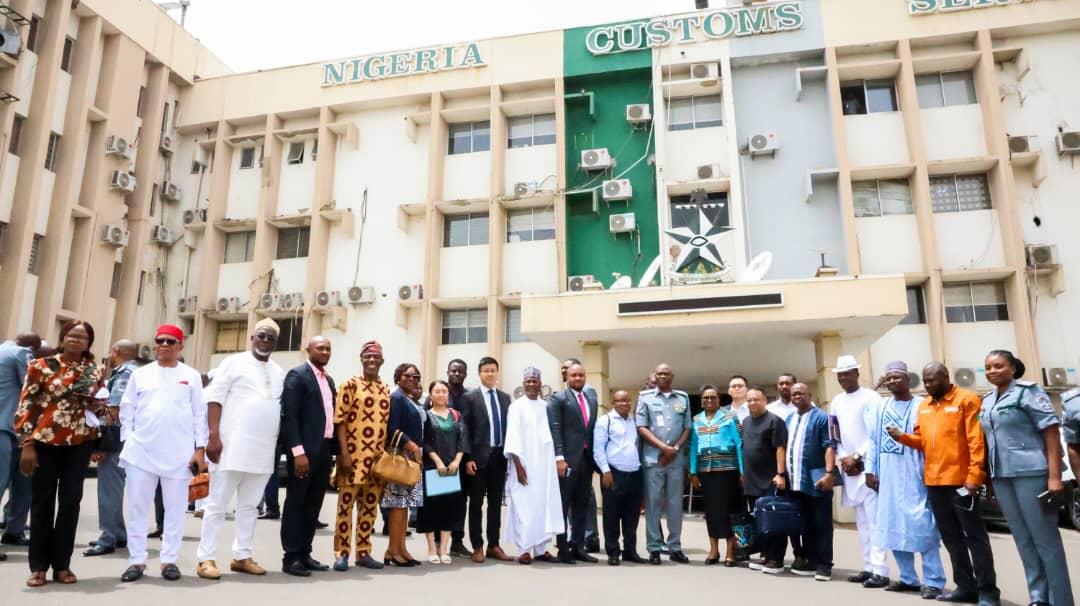
The Nigeria Customs Service (NCS) has championed an Authorised Economic Operators (AEO) programme, to enhance the efficiency and predictability of trade facilitation efforts in the country.
The Service also signed a memorandum of understanding (MOU) with the Joint Tax Board at the NCS headquarters Abuja.
On the AEO,Programme,The Comptroller-General of Customs (CGC) Adewale Adeniyi MFR, during a stakeholders Meeting in Abuja, said the programne would foster collaboration between the Nigeria Customs Service, the Government Agencies (OGAs) and the Experts to boost AEO programmes.
The CGC underscored the determination needed to work together and ensure that the narrative is changed about the ease of doing business in and around Nigerian ports.
“And if you have observed, you will also see that AEO cuts across virtually every player in the sector, the exporter, the importer, the government agencies, regulatory agency, the customs and everybody in one way or the other.
“So this allows us to address some of those issues. So that when next operators talk about compiling how much it takes them, we will see data that are a little bit more friendly,” he said.
He recalled that the NCS in February 2024 launched a Time Release Study (TRS) as another measure to optimise the trading experience within Nigeria.
Assuring the stakeholders of Nigeria Customs Service’s commitment to run the pilot program of AEO successfully, the CGC said, “As we are taking the steps with you with the implementation of the Authorised Economic Operator program, which hopefully will start from the 15th of April 2024.”
Adeniyi explained that the objectives of the pilot program as a course were to evaluate the visibility and effectiveness of implementing the AEO program within the Nigeria Customs Service and to solicit feedback from all our key stakeholders.
He said, “All these pilots that we want to run, we aim to identify potential challenges, fine-tune our processes, and lay the groundwork for a full-scale rollout of the AEO program.”
The CGC expressed optimism that the Service will be committed to fostering transparency, inclusivity and collaboration while ensuring that the program’s designs and execution align seamlessly with international standards.
“Why we do this is we want to remain attuned to the unique realities of our local context.
“Seven key stakeholders that are legal entities whose operations span across the international supply chain have been carefully selected by the pilot programs.”
The CGC revealed that selected Importers, Exporters, Small and Medium Enterprises, Customs Licence Agents, Logistics Operators, and Government Agencies as pilot stakeholders to run the pilot scheme of the AEO program in Nigeria.
He expressed his readiness to partner with business stakeholders to enhance trade in Nigeria and also urged the participants to expedite their commitment to ensuring the potential of the AEO program, which would foster a culture of efficient customs processes compliance, integrity, and collaboration that will propel Nigeria.
“This is a collective and transformative journey we must come together with renewed determination. Knowing that together we can shape a future that knows no boundaries and prosperity with no limits,” he said.
Also, Awa Nnenna, Chief Superintendent of Custom and Project Manager of the Authorised Economy Operator said the pilot phase of the program is designed to streamline Customs clearance processes while ensuring transparency and inclusivity in line with international standards.
Awa noted that the key benefits of the AEO program include expedited Customs clearance procedures and the establishment of mutual trust between Customs authorities and accredited operators.
“By facilitating smoother trade operations, the programme aims to stimulate economic growth.”
On his part, Charles Odii, Director-General of the Small and Medium Enterprises Development Agency of Nigeria (SMEDAN), commended the Nigeria Customs Service for its proactive approach to engaging small-scale business owners through the Authorised Economic Operator (AEO) program.
Odii, while reiterating his commitment towards supporting the AEO programme, said the initiative will contribute to the growth of Nigeria’s GDP and Foreign Exchange reserves.
He emphasised the importance of creating avenues for domestic business owners, particularly SMEs, to participate and benefit from such initiatives.
“I believe that this program will enable SMEs to enhance their investments and leverage the opportunities presented by the AEO window.”
He added that the program will not only streamline trade processes but also change the narrative surrounding trade in the country, ultimately fostering a more conducive environment for business growth and development.
“As we are launching this scheme, I am looking forward to the many more testimonials within the next six months.
“What we want to do is get all the testimonials to help ease the operations at the port and see how these will trickle down to job creation and just helping to increase livelihoods of small business owners in Nigeria,” he added.
Mr Pius Akutah, CEO of the Nigeria Shippers Council, commended the NCS for the initiative and reiterated the council’s commitment towards supporting and ensuring the success of the AEO programme.
In a similar development, the Customs CG had signed the MOU with the Joint Tax Board at the NCS headquarters Abuja recently.
The MOU was signed during a courtesy visit by the Secretary of the Joint Tax Board, Olusegun Adesokan, to the Nigeria Customs Service, with the aim to foster collaboration and enhance effective tax management in Nigeria.
The CGC emphasised the collective efforts invested in finalising the MOU.
The purpose of signing the MOU is to strengthen and enrich strategic collaboration towards fostering a vibrant economy for the country. Consequently, it aims to lay a foundation for future endeavours and integrate fiscal policies to enhance data facilitation.
The Executive Secretary of the Joint Tax Board, Adesokan, extended his deepest appreciation to the Comptroller-General of Customs and the Service. He noted, “As a result of this, the meeting on the 16th of January has indeed reached a milestone. I commend the team for their foresight that led to the successful signing of the MOU.”
Sent from Yahoo Mail on Android
Reply, Rep