

.Hosts Reps Committee on Customs &Excise
The revenue collected by the Apapa Port Command of the Nigerian Customs Service between January and March 2025, rose by 53.9 per cent, as against the level in the corresponding period of 2025
The Command generated the sum of N753.8bn as revenue to the Federation coffers in the first quarter of 2025 as compared to N489 billion collected in the same period of 2024 , an increase of N205 billion.
This is as the Command achieved a daily record-breaking revenue collection of N18.9bn on Friday, March 14, 2025, representing the highest in the 135 years history of the Service.
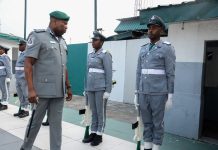
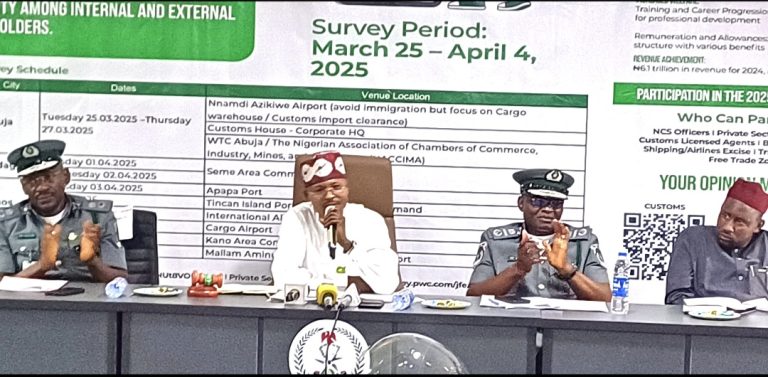
The Customs Area Controller of the Apapa Command, Comptroller Babatunde Olomu revealed the revenue statistics, when he hosted the House of Representatives Committee on Customs and Excise, led by its Chairman, Hon. Leke Abejide to the Command on oversight function.
Comptroller Olomu explained that the new daily revenue record breaks the erstwhile highest daily collection of N18.2bn, which was achieved in October 2024 by the Command.
He attributed the Command’s achievements in the areas of revenue collection and anti- smuggling to compliance in the payment of the requisite revenue on goods successful collaboration of the Command with relevant stakeholders and effective gathering, processing and deployment of intelligence for national economic interest and security.
In the areas of anti- smiggling, he said during the period, the Command recorded nine seizures out of which five were unregistered pharmaceuticals smuggled into the country.
Olomu said the command is playing a critical role in the Service’s modernization agenda, especially on the implementation of the Unified Customs Management System (B’Odogwu) and that between January 2025 to date,
To facilitate trade and boost the revenue generating capacity of the NCS, Olomu advised the Committee to interface with other government stakeholders regulating terminal operators like Eko Support, ENL, and APM Terminals on the need for them to upgrade their working equipment in line with the concession agreements signed with the Federal Government.
He identified one of the key challenges of the Command as shortage of scanning machines and essential technological equipment while he advised for a legislation towards the procurement of more scanners at the ports and border stations to facilitate cargo clearance.