


FEATURE
By Shola Fadeyi
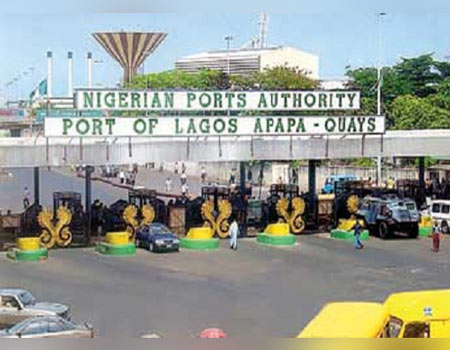
The Lagos Port Complex(LPC) popularly referred to as the Premiere Port , the largest in Nigeria , has proved to be more efficient in recent times , providing improved services to port users, shipping companies , importers and freight forwarders, among other stakeholders alike , making it possible for the Nigerian Ports Authority(NPA) to improve its contributions to the economy.
Reforms
This has been due to the effectiveness of the various reforms which the current Port Manager , Debo Lawal has enunciated since his assumption of office in August 2024 , and the support he has received from the NPA Managing Director , Dr Abubakar Dantsoho.
Security&Safety
Consequently , safety and security of cargoes and personnel, ship turn around time and ship waiting time and cargo dwell time have improved overtime at the Lagos Port Complex(LPC).
For instance he has succeeded in putting a tighter security arrangement in place by getting the NPA to bring back on‑board gangway security men and tally clerks,
Through the measure , he has been able to plug the serious security gap he met on ground which labour groups have complained about, reduced un-authorised boarding, curbed cargo theft and helped restore confidence in the port’s revenue collection.
The Port Manager has also enhanced security at the waterside , through his teeming up with the Lagos State Ministry of Waterfront Infrastructure to clamp down on illegal dredging that was choking the channels and flooding coastal communities while he has with the support of the NPA been able to deepen the Port’s channels.
Illumination of the Port
As part of measures to improve safety at the Lagos Port , the Port Manager had also embarked on a major lighting upgrade, under which high‑mast floodlights were installed across the berths and yard, and the whole complex wired with CCTV and motion‑sensor lights to boost security after dark. The step has thus made the port safer for workers and cargo as well as cut down on night‑time theft and downtime . <
Improvement In Vessels Turnaround Time
By enforcing stricter permits and through the partnership with the Ministry , he has been able to keep the main shipping lanes clear, thereby speeding up vessel turnaround time from about eight days to under five, boosted berth occupancy and made the port a safer, more reliable gateway for trade and a more navigable hub , even as he has reduced the risk of accidents by vessels on waters.
Checking Traffic Congestion
In a bid to ensure free flow of traffic in the Port’s Access Road and within, the Port Manager had to carry out a comprehensive review of the Electronic Call‑Up (ETO) system in alignment with global best operational standard, to address past inefficiencies at the port and for the purpose of proper order in truck operations , which is now prevailing at the port.
The reform had led to the introduction of colour‑coded tags and serial numbers – blue 001 for APMT, orange 002 for ENL and put in place automated barriers which has made it difficult for trucks to wander into the wrong terminal and berth.
This has worked efficiently to put an end to the tradition where trucks roamed the terminals looking for goods to lift , cut the “criss‑crossing” of empty containers and reduce the massive truck queues that have plagued the port, slashed congestion and also cut the time ships spend at berth.
Additionally, he has ensured that every vehicle passes through government‑approved transit parks before getting to the terminals, a measure , which has tightened security and free the gates of traffic snarl.
Free Exit and Entry of Trucks
In a view to allow for free exit and entry of trucks at the Lagos Port , Lawal has demonstrated his zero tolerance for wrongful and indiscriminate parking within and on the Port’s access roads and other lawless acts by truck operators, while he has continually taken measures to check the acts.
This has been due to his insistence that the LPC works efficiently at optimum capacity with sustained seamless inflow and outflow of vehicles, to promote trade and achieve ease of doing business for all port users.
Automation
The current Port Manager has also been the motivation and driving force behind the recent automation wave at the LPC as he has been able to push through the introduction of the Integrated Electronic Barrier System across every terminal gate,under the leadership of the MD of NPA , Dr Dantsoho , forcing trucks to present a valid Eto‑issued call‑up ticket before they’re allowed in the Port.
The technology has thus been able to clear the notorious Apapa bottleneck and gave the port a real‑time gate‑control backbone. By wiring the barriers straight into the existing Eto Electronic Call‑Up System (operated by Trucks Transit Parks Ltd.), the PM has created a seamless, transparent flow of cargo‑bound trucks, cutting waiting time and slashing logistics costs for importers and exporters alike .
The beauty of the PM’s automation agenda is that it has impacted on the Federal Government’s Ease of Doing Business initiative , promising greater transparency, accountability and a business‑friendly environment, raising hope of the successful introduction of the same electronic gate controls to other Nigerian ports and preparing the Lagos Port Complex for the position of a regional maritime hub.
Collaborations
This is why he has constantly collaborated with sister government agencies such as the Nigerian Police and other private sector stakeholders in ensuring free flow of traffic within and around the LPC in Apapa for the fact that he knows that any difficulty in exiting the port automatically translates to challenges in accessing the ports , thus creating a setback for the economy.
Restructure Gate Closure Protocol
As part of the various measures he undertook to check congestion at the Lagos Port, the Port Manager in conjunction with the NPA management in June this year had to take steps to introduce a restructured gate closure protocol at APM Terminals, where the Terminal was directed to issue closure notices in a three-step sequence: an initial notice five days in advance, a reminder after three days, and a final confirmation one day prior to closure.
Movement of Containers To Off-dock Terminals
APMT was made to move import containers to off-dock terminals to ease pressure within the main terminal yard while it should regularly share yard stock updates with shipping lines to improve coordination and reduce delays. Since then, the Port Manager on behalf of NPA has increased the rate of inspections of holding bays and collaborated more closely with stakeholders , a development that has ensured smoother cargo and container flow.
25 Years NPA Master‑Plan
Due to his capacity in terms of knowledge , the Port Manager has also been part of the broader partnership between the Lagos State Government, the Nigerian Ports Authority and a host of private‑sector players to draft a 25‑year National Ports Master Plan. The idea is to align port locations, sizes and activities with long‑term economic growth, sustainability and global competitiveness.
Synergies with Ministries and Industry Groups – The Port Manager has likewise been a key participant of series of stakeholder sessions where the NPA’s MD have met with port users, terminal operators and community representatives to map out further reforms, including infrastructure upgrades and automation of the Lagos Port and Tin Can Port that will gup over &1 billion .
Cleaner Port Environment
The Ports channels have also become more navigable , while the Port’s environment are now cleaner , sequel to the penalties which the Port Manager imposed on four operators for violating environmental laws.He has likewise been able to check pollution, enforced clean‑up deadlines on the waters within the Port and boosted the movements of patrol boats.
These reforms made it possible for turnaround time for vessels to drop from about 8 days to under 5 days for berth occupancy to jump to over 76 % (from roughly 50 %), while cargo security improved , turning the Apapa Port into a smoother, cleaner, and more efficient gateway for Nigeria’s trade.
Round The Clock Operations
In the realm of 24 hours operations at the Complex, the Port Manger had also been woking effectively to achieve this , making it possible for him to properly key into the Notice issued by NPA , confirming the continuation of 24‑hour operations to ease congestion, while the Federal Ministry of Transport later endorsed a 24/7 port system to speed up cargo movement and improve the Ease‑of‑Doing‑Business index.
Conclusion
Consequently, the Port Manager can safely be said to have been managing the day- to- day operations of the LPC, effectively in the past over one year , but he would continue to do better , through improved partnering with government bodies and other stakeholders while introducing more tech‑driven measures that will make the Port, the expected hub for the West and Central African sub- region, sooner .