
By Shola Fadeyi
Stakeholders at a one day Conference organized by the League of Maritime Editors in Lagos, have called for accelerated reforms and rehabilitation of the Eastern Ports in the realm of a deliberate and sincere channels management and an honest and reliable dredging to support enhanced navigation and improve ports operations.
Their recommendation which forms part of the Communique issued after the Conference titled “Lagos/Eastern Ports: How to Reverse Existing Imbalance in Disproportionate Cargo Vessel Calls”,resolved that the development of the Eastern ports should be treated as a national economic priority, given their proximity to major industrial, agricultural, energy and commercial activities.
To scale up the improvement in cargo distribution in the eastern port corridor, participants prescribed a policy review and recalibration of Nigeria’s captive cargo’ and ‘contestable cargo’ framework via a system initiative known as industrial recall; which recognizes the economic advantage of all regional port system, built on the identified opportunities.
The Communique acknowledged that the imbalance between Lagos and the Eastern ports is the result of longstanding infrastructure, investment, operational and commercial challenges and cannot be reversed overnight.
It affirmed that the imbalance can be addressed through sustained infrastructure investment, improved security and navigation, competitive pricing, digitalization, efficient transport connectivity, economic industrial hubs through stronger public-private-participation model.
The participants urged regular publication of reliable port performance data to enable shipping lines, cargo owners and investors to make informed and reliable decisions based on actionable data and measurable performance.
The conference called on the Federal Government and all stakeholders to pursue a competitive, balanced and efficient port system, in which Lagos remains a major maritime gateway while Onne, Rivers, Warri, Calabar and other viable ports are developed to attract a greater and more diversified share of the national and regional trade.
It also recommended a National Port Competitiveness Index framework to guide cargo distribution and regularly measured performance of Nigerian ports.
It was also resolved that the Nigerian Ports Authority should step up its pilotage services on a round the clock basis to provide cargo ship owners the impetus to proceed to berth on a timely basis.
The stakeholders recommended reliable and trusted digitization of ports trade processes, one-stop-shop trade information flow and dispute resolution system, aimed at reducing physical contact and strengthening compliance and transparency.
The participants likewise expressed satisfaction with the wave of improvement in the quality of maritime training and the universal training curriculum in line with the guidelines of the IMO.
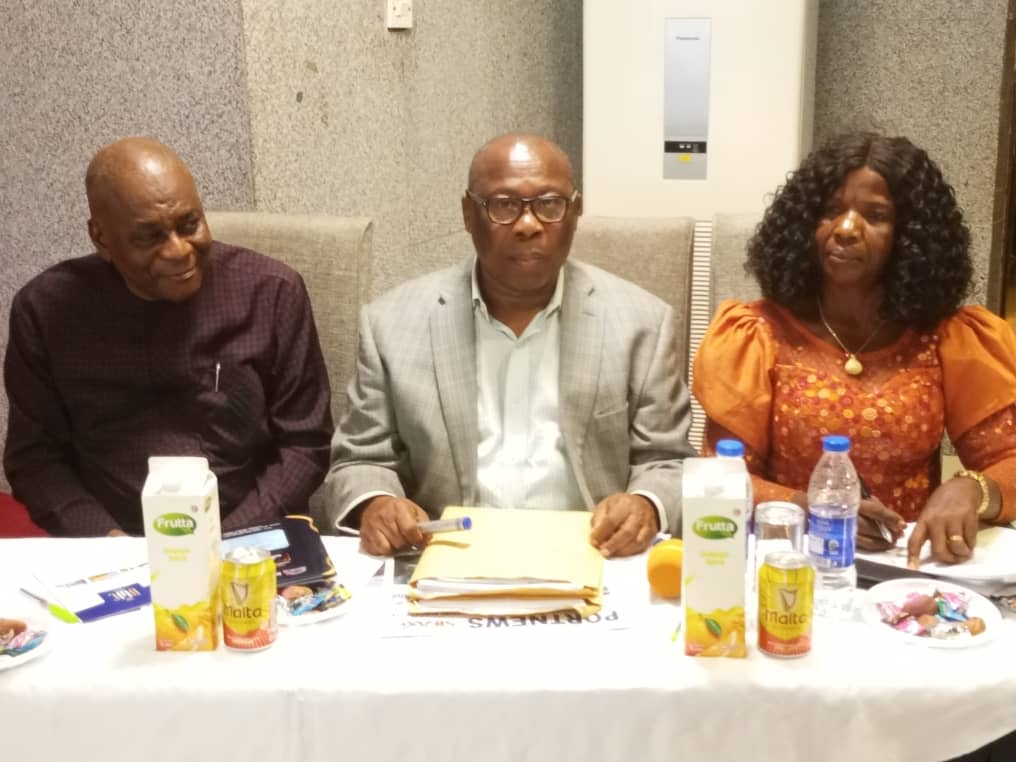
The conference provided a platform for stakeholders to examine the longstanding imbalance in cargo vessel calls between Lagos and Eastern ports and to identify practical measures for developing a more balanced, competitive and efficient national port system.
It brought together key industry stakeholders with participants drawn from the Federal Ministry of Marine and Blue Economy and agencies under it, including the Nigerian Ports Authority (NPA), Nigerian Maritime Administration and Safety Agency (NIMASA), Nigerian Shippers’ Council (NSC), and the Maritime Academy of Nigeria (MAN).
The Nigeria Customs Service (NCS) was also represented alongside a star parade of freight operators, maritime academics, and industry experts.
The Minister of Marine and Blue Economy, Dr. Adegobyeaga Oyetola CON was represented by the Director of Press, Mrs. Anastasia Ogbonna; the Managing Director of the Nigerian Ports Authority (NPA); Director General, Nigerian Maritime Administration and Safety Agency (NIMASA); Executive Secretary, Nigerian Shippers’ Council; Rector, Maritime Academy of Nigeria (MAN); and the Council for the Registration of Freight Forwarders in Nigeria (CRFFN) was represented by Engr. Seyi Iyawe, Edward Osagie, Mrs. Adaora Nwonu, Dr. Hakeem Lawal, and Madam Umoru Bintu, respectively.