
By Shola Fadeyi
The Dr Bashir Jamoh led management of the Nigerian Maritime Administration and Safety Agency (NIMASA) has indeed succeeded in scoring a fresh landmark achievement in its administration ,as it sets machinery in motion to kick off the practical disbursement of the Cabotage Vessel Finance Fund (CVFF) anytime from now, to the competent and qualified beneficiary indigenous shipping companies.
Approval
This is sequel to the approval of the former President Muhammadu Buhari in January this year , for the Fund to be disbursed after series of efforts by the NIMASA DG and the former Transportation Minister , Muazu Jaji Sambo, to secure the endorsement, and following the go ahead given by the 9th National Assembly , after the outcome of its investigation, that the money that has accrued to the Fund has been intact.
New Minister of Transportation
Thus , for the fact that NIMASA and the Transportation Ministry have ensured that all the necessary guidelines and modalities required for the disbursement of the Fund ,have been taken care of, the Fund is then to be disbursed to the beneficiaries , once the new Minister of Transportation to be appointed by President Bola Tinubu settles down in office.
In fact , the stage for the disbursement of the Fund has been set, since the Federal Government gave its approval for the money that has accrued in the CVFF to be given out to the qualified beneficiaries , which should be Nigerian Shipping Companies , following the request , the NIMASA as the Administrator of the Fund, made to the Transportation Minister, who recommended to the President .
Activities
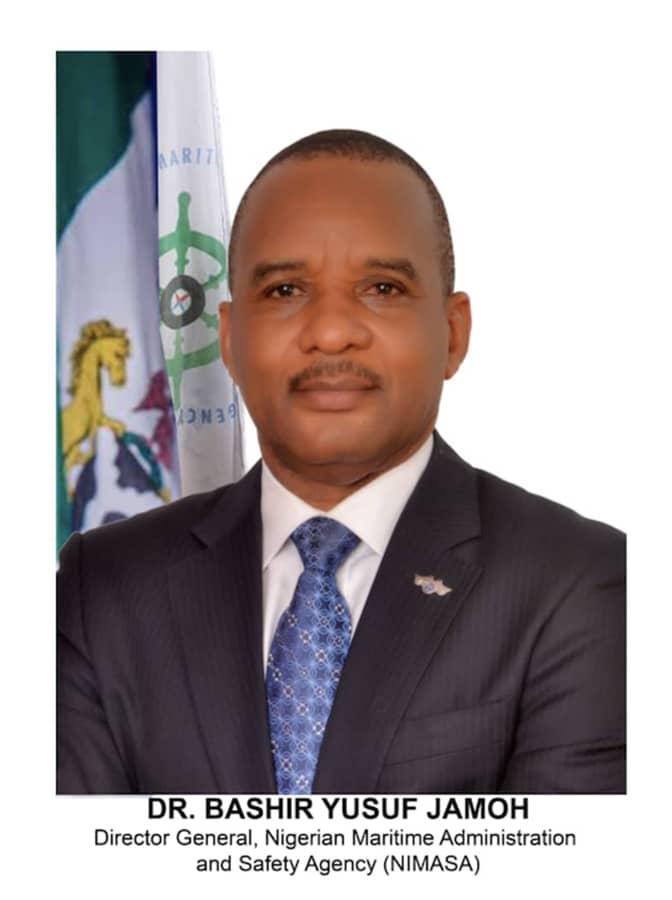
Thus , it was after then, that NIMASA represented by its Director General , Dr Bashir Jamoh had to continue the flurry of activities ,which he has been engaged in since he became the helmsman of the Agency in March 2020, to ensure that the implementation of the necessary modalities leading to the practical disbursement of the Fund takes place.
Engagement with PLIs
This is why NIMASA , had in January this year , immediately met with the Chief Executives of the five appointed Banks,otherwise known as the Primary Lending Institutions(PLIs), namely , Union, Zenith, Polaris, UBA and Jaiz Banks and gave them 72 hours time limit to come out with the Guidelines and modalities for the loan.
NIMASA had decided to engage the banks on the management and disbursement of the CVFF , for the fact that they possess, as finance institutions , the professional know-how in fund management to reduce the risks , associated with such technical venture and to avoid the same mistakes of the Ship Acquisition and Ship Building Fund(SASBF) , the CVFF precursor , which was scrapped in 1996.
Interest Rate
Thus ,the Agency had tasked the PLIs to engage and decide on the interest rate, which he said should be of international best practices because the fund being disbursed is Dollar denominated, a development , which made it to insist that the loan must be given out in a single Digit interest rate to ensure easy repayment by the beneficiaries.
NIMASA had also tasked the banks to consider the issues of tenor, collateral, and other requirements needed to access the fund in arriving at their guidelines to ensure that the disbursement of the loan and its subsequent repayment are fast tracked.
Submission of Guidelines
To lend credence to the fact that the disbursement of the loan would kick off soon, NIMASA had already concluded the fine- tuning of its own modalities on the facility , with its consultant, while in adherence to the task given it by NIMASA, the five banks have also put together the requisite guidelines for the disbursement on their own side,
While the PLIs had submitted the document to the NIMASA , the latter has likewise forwarded it to the Transportation Ministry , which as the Supervising Ministry of the Agency , has the authority to give the final decision on the Fund on behalf of the Presdent.
Applications
Also , the indigenous ship owners , who are interested in benefitting from the Loan have also submitted their various applications to NIMASA , even as the details of the modalities for the disbursement submitted by banks to the Ministry remain undisclosed.
It is pertinent to note that the current leadership of the NIMASA has made various efforts to make the disbursement of the Fund , a reality, since Dr Jamoh was appointed the Director General of the Agency , particularly , having made the task , one of his priority achievements , to develop the Nigeria’s shipping sector and enhance its contributions to the economy.
Measures
Thus, the series of profound measures , which the ongoing management of NIMASA has adopted on the Fund, has been on the heels of the efforts of the past managements, on the matter , while the disbursement has been delayed due to the lack of adequate Political Will on the part of the past administrations in the country, which culminated in various unfulfilled promises on the scheme.
This is why the CVFF had outlived several Ministers of Transportation, which has the enabling power to make recommendations to whoever is the President of Nigeria , for approval on the Fund , as well as many Director General of the NIMASA who has the responsibility of disbursing the Fund, in terms of several unfulfilled pledges they have made to release the money to the relevant beneficiaries.
Purpose of CVFF
CVFF, is an intervention fund created to provide financial assistance to Nigerian operators in domestic coastal shipping. Contributions into the Fund commenced with the coming into force of the Cabotage Act in May 2004.The disbursement of the CVFF is backed by the provisions of Section 42(1)-(2) of the Cabotage Act 2003. The Fund was established to enable indigenous ship owners take control of the Cabotage trade.
Contributions to the Fund
The Fund is generated from a surcharge of two per cent , of the contract sum performed by vessels engaged in coastal trade, monies generated from tariffs, fines and fees for licenses and waivers, a sum periodically approved by the National Assembly, and interests that accrue from loans granted from the Fund.
It was conceptualized in such a way that applicants of the Fund would make an equity contribution of 15 per cent , NIMASA 50 per cent , while 35 per cent, would be provided by the banks. Additional requirements for qualification under the Fund are as set out in the CVFF Guidelines 2006 and as approved by NIMASA from time to time.
Ease of Loan Repayment
As part of measures to make it easy for the beneficiaries to repay the loan , NIMASA had ensured that the Nigerian National Petroleum Limited (NNPL) takes up 9 per cent of the 15 per cent of the loan to be repaid by the prospective beneficiaries , even as shipping companies have been accessing the opportunity.
Single Digit Interest Rate
However, NIMASA has ensured and insisted that the Primary Lending Institutions must give out the Fund to the prospective beneficiaries at Single Digit Interest rate to make it easy for the Loan , for which the Agency has emphasized is not a grant , to be paid back as at when due so that others can benefit from it.
The Agency had taken the decision to ensure that the fate that befell the precursor of the CVFF , the SASBF, which existed under the defunct National Maritime Authority (NMA) in 1996, did not repeat itself , when some of the beneficiaries saw the loan as their own share of the National cake and refused to pay back till date.
Number of Vessels to be Acquired
Thus as part of the arrangements connected with the disbursement of the Fund, NIMASA has since concluded with the Transportation Ministry, that a total of 28 vessels is expected to be acquired from the total sum of $700 million, that would eventually be disbursed from the Fund, through which each beneficiary may benefit to the tune $25m.
Amount in the Fund
This is why , immediately after the approval of the Presidency, the Ageny’s DG had followed up with the announcement that the funds available for disbursement was slightly over ₦16 billion naira and $350 million dollars.
In his words, then “What we have collected so far is in two folds, made up of Naira and Dollar components. So far, the Funds available under the CVFF in naira component is around Sixteen Billion naira (₦16,000,000,000:00), while contributions in Dollar component hovers around the Three Hundred and Fifty Million Dollar mark ($350,000,000:00).
Probity
To demonstrate accountability in the collection of the Fund a document from NIMASA showing the breakdown of the collection from January 2007 to October 2022 revealed that the amount transferred from local banks to Treasury Single Account (TSA) is N20,613,344,488.8, while amount paid directly to TSA is N16,953,322,635.17, putting the total naira collection (NGN) at N 37,566,667,123.97.
According to NIMASA, for the dollar collections, the amount paid directly to Central Bank of Nigeria (CBN)/Access Bank is $257,228,760.32, amount with OAGF is $12,147,632.66, while the total dollar collections (USD) is $269,376,392.98.
Dollar collections converted to Naira (USD269.38million at NGN410.15/USD) is N110,484,727,580.75, while the total balance in Naira for both the naira and dollar collections is N148,051,394,704.72
Efforts
To demonstrate the extent to which NIMASA has been proactive at ensuring that the CVFF disbursement kicks off, Dr Jamoh had immediately gotten the Ministry of Transportation to liaise with the Minister of Finance and the Governor of the Central Bank of Nigeria, for the necessary actions needed to be taken on their sides, following the approval of the disbursement by the Federal Government.
This is to avoid any situation that will truncate the giving out of the Fund to the relevant beneficiaries as it happened about two years ago , when expectations were so high among the stakeholders in the shipping sector that the CVFF would be disbursed to the relevant beneficiaries.
In fact , the immediate past Transportation Minister, Rotimi Amaechi had in 2021 , while he was still on the saddle , made efforts to secure the approval of President Buhari for the disbursement , but his claim that the Finance and Budget Ministry had said that the money that has accrued into the Fund does not belong to shipowners but owned by the Federal Government truncated the move.
Conviction
But this time, the fact that the NIMASA DG with the Transportation Minister were able to convince former President Buhari ,that the funds belong to the ship owners, made him to agree to give his approval to the disbursement to legitimate ship owners.
Also as part of the continuation of the process of accountability , NIMASA cum Transportation Ministry have agreed to allow the funds to go into the Treasury Single Account, TSA, while once the money hits the threshold of $50million, the CBN upon recommendation from the Agency and the Transportation Ministry would be expected to transfer the funds to the Primary Lending Institutions.”
Benefits of CVFF
For Jamoh, the efforts that have been invested to ensure the disbursement of the Fund stem from the fact that it will not only enhance local shipping business, but also assist in creating jobs for the over 2,041 Nigerian Seafarers trained by the Agency, in various institutions overseas, out of which over 800 have gained jobs with shipping companies globally.
Training
The seafarers were supposed to be trained in Nigeria, by NIMASA and retained in the country to provide a pool of personnel for the maritime sector , but this has not been possible due to the absence of fleet to provide jobs for them in Nigeria after their training overseas.It is expected that the vessels to be procured by beneficiaries of the CVFF will fill the gap, when it is considered that one vessel has the capacity to employ up to 40 seafarers .
The expectations is also that the purchase of the vessels will awaken the nation’s dying marine insurance sub-sector as well as assist in realizing Blue Economy Initiative of NIMASA , meant to harness the nation’s marine resources for the development of the economy.
The need for NIMASA to have the CVFF disbursed to ship owners is also to enable local shipping companies have the requisite number of fleet to participate in the Cabotage business and as such reduce the dominance of the trade by foreign shipping firms to the barest minimum.
Conclusion
The approval to disburse the Fund is no doubt a step in the right direction, considering the tremendous benefits the step holds for the maritime sector and the Nigeria’s economy. There is no doubt that the sector will benefit substantially if the Fund and investments are properly managed, and beneficiaries adhere to the laid down regulations that govern the implementation of the Fund.
This is just why NIMASA must endeavour that there are adequate precautions and stop gaps in the guidelines for the disbursement of the loan, to deter beneficiaries from failing to pay back , so that the CVFF will not fail like the SASBF, and as such deny more shipping companies from reaping the benefits of the Fund.
- SHOLA FADEYI IS PUBLISHER MARINE AND ECONOMY AND MD SIMOFAD COMMUNICATIONS LTD.