

The Managing Director of the Nigerian Railway Corporation (NRC) , Dr Kayode Opeifa has said that the establishment of the Lagos State Traffic Management Authority (LASTMA) in 2020, by the then Governor of Lagos State, Bola Tinubu who is now Nigeria’s President, has provided the compass being copied by other States of the Federation.
Speaking at the Silver Jubilee Celebration of LASTMA in Lagos, Opeifa a former Commissioner of Transportation in Lagos State who had the privilege to nurture LASTMA , when he was the Special Adviser on Transportation to a then Lagos State Governor, described the Authority, as a masterstroke in public policy.
He said LASTMA’ which was established as a response to a local challenge that seems intractable, has proved to be a policy decision that was not only bold, but audacious , just and right ,has remained effective in efforcing the people’s rights and visibly impacting on managing traffic enforcement.
“LASTMA’s impact and successes are visible and several States are already copying the policy in managing traffic in several urban centres across the country’’, according to the NRC MD.
Opeifa who noted that traffic management had been the forte of the Nigeria Police, explained that LASTMA’s establishment not only challenged the concept of true federalism as it decentralized traffic management in Nigeria as far back as 25 years ago.
“LASTMA’s impact on traffic management over the years have been visible, sustainable and scalable and replicable as many subnational governments are now approaching the state to copy its operational model.
“Your impact in Lagos State and Nigeria traffic management is truly impactful and legendary. Your creation remained one of the few workable models in Nigeria for the traffic management. Your role in modern urban planning, safety and institutional reforms remain legendary’’, he stated.
He said the LASTMA’s example has shown that local solutions can become a national phenomenon.
“Your successes are unmatched anywhere in Nigeria by any policy agency. You stand out as a bold and strategic intervention in Nigeria urban mobility landscape.
“As a policy response to traffic gridlock and the breakdown of law and order, you remained a successful signpost.
“You represents a master stroke in public policy since independence, blending law enforcement, civil and urban planning into an institutional framework that stands the test of time, politics and government.
‘’With your unique enforcement tactics, to your vital role in keeping Lagos traffic moving with pride, dignity and honour you remained the defining symbol of how subnational governance can innovate to solving urban problems,” Opeifa added.
He paid glowing tributes to the staff of the agency who fell in the line of duty as well as those maimed just for keeping the traffic moving.
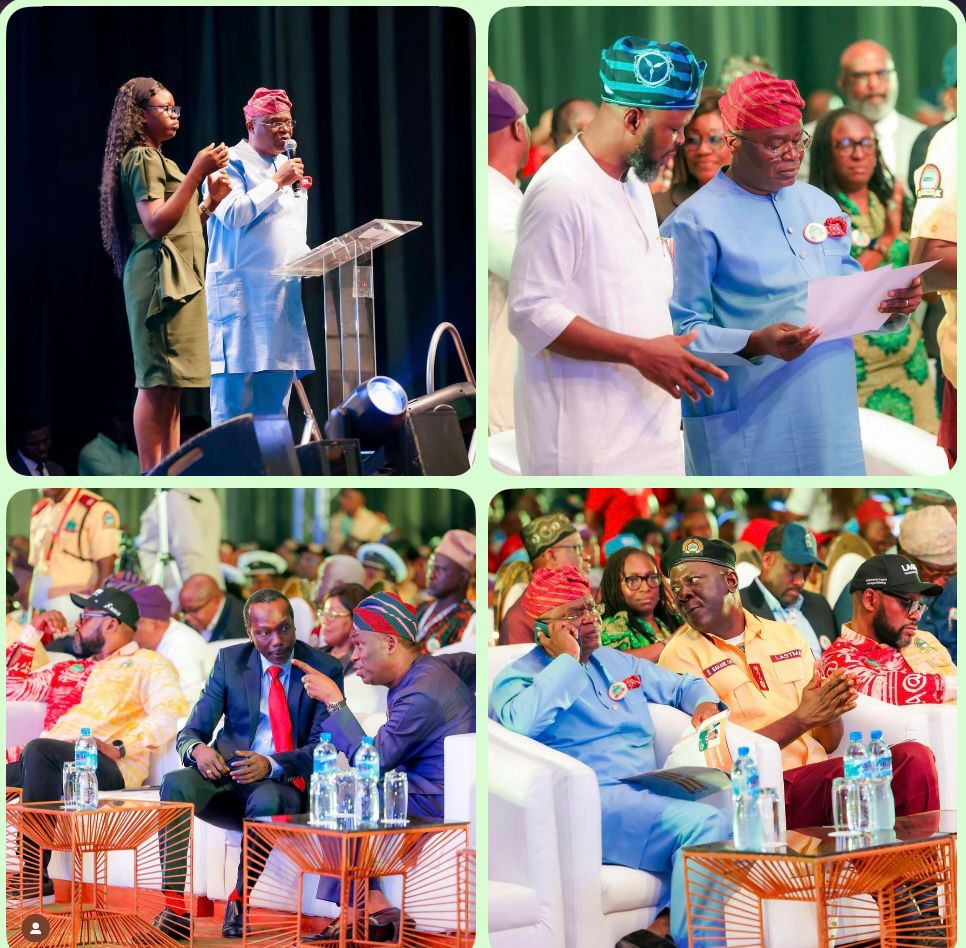
Earlier. the Lagos State Deputy Governor Dr Obafemi Hamzat, unveiled a strategic vision for the future of traffic management in the state.
Hamzat, who represented Governor Babajide Sanwo-Olu at the Silver Jubilee celebration also paid tribute to the agency’s legacy, acknowledging the sacrifices of its fallen officers.
“Lagos, as a mega city, has faced unprecedented urban growth, huge population explosion and increasing vehicle numbers, all of which intensify traffic congestion and safety concerns,” he said. “Without LASTMA, all of us can’t function. That is the truth, and as such, we must respect them while they do their job,” he said.
In an emotional moment, Hamzat honored the memory of LASTMA officers who lost their lives in the line of duty, noting that their sacrifices will never be forgotten. “To the families of those fallen heroes, we owe a debt that can never be fully paid. Their legacy will forever inspire us.”
Reflecting on the journey of the agency since its establishment in 2000, the Deputy Governor praised LASTMA’s transformation from a modest traffic control outfit into a technologically advanced mobility management body.
“In those early years, the agency confronted infrastructure deficits, limited technology, and the daunting task of changing user behavior,” he noted. “Yet through unwavering dedication, innovative reforms, and strategic partnerships, LASTMA has overcome those obstacles, according to him.”
He added that LASTMA has evolved from relying on “whistles and hand signals” to deploying “cutting-edge technology, including real-time traffic monitoring systems, automated number plate recognition, and digital communication platforms.”
The agency’s model, according to Hamzat, has inspired 26 Nigerian States and four West African countries to adopt similar structures. “So they are doing very well. We are proud of LASTMA,” he declared.