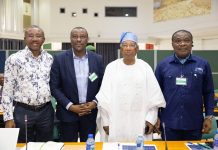




The Managing Director of the Nigerian Ports Authority (NPA) , Dr Abubakar Dantsoho has said that the Federal Government’s recent policy on transfer of Inland Dry Port (IDP) management and development functions to the NPA will bring port efficiency closer to businesses operating far from the coastal ports.
He revealed this while speaking during the NPA Special Day at the 21st Abuja International Trade Fair with the theme “Resilient Trade, Taxation, and the Economy,” organised by the Abuja Chamber of Commerce and Industry (ACCI) in Abuja
The NPA MD said that this policy will particularly benefit exporters in the North and central Nigeria, including Abuja, in terms of reducing the need to transport raw commodities to coastal ports before clearance and documentation requirements can be completed.
Dantsoho added, “By bringing Inland Dry Ports under the operational purview of the NPA, exporters in northern and central Nigeria, including right here in Abuja, no longer need to move raw commodities to coastal ports before undergoing port clearance and documentation.”
He disclosed that the Authority has rolled out fresh measures to ensure that bottlenecks affecting non-oil exports in the country are removed adding that the steps include the move to expand export channels, improvement on cargo processing as well as boosting of foreign exchange inflows into the nation’s economy.
The NPA boss disclosed that the organization has already introduced clear interventions that will remove bottlenecks suffered in non-oil exporters, such as the operationalization of dedicated Export Processing Terminals.
The terminals, he said, serve as one-stop centres where sorting, packaging, quality certification and customs documentation can be completed before export cargo is moved to the terminals.
Dantsoho stated that such interventions have so far been supporting the growth of non-oil exports, in the areas of agricultural commodities and solid minerals, adding that this has been helping Nigerian producers meet international delivery schedules.
He said the organization is working on rehabilitating port infrastructure and extending maritime logistics into the hinterland so that exporters can access global markets efficiently, adding that trade resilience requires efficient infrastructure, predictable fiscal frameworks followed by seamless supply chains as the nation’s economic resilience can no longer depend largely on imports and oil revenues.